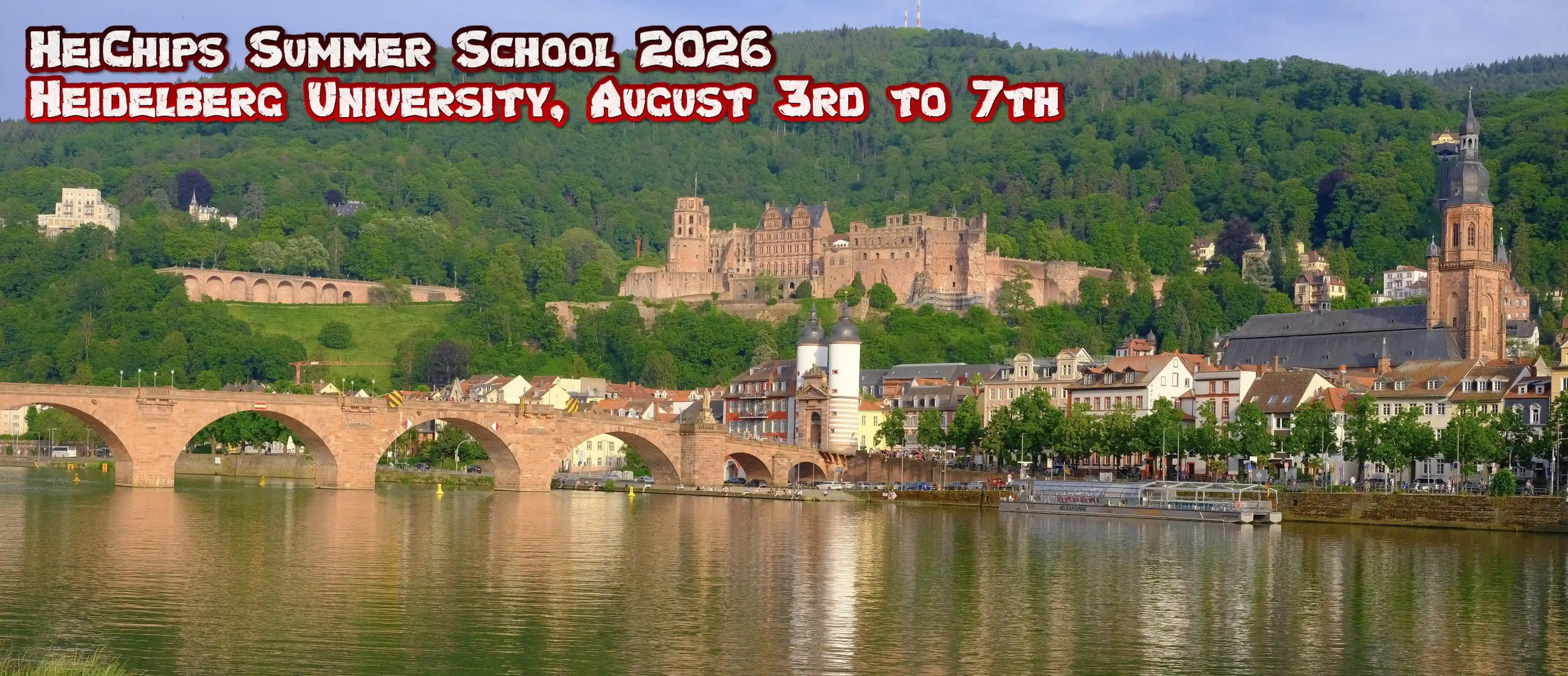
Summer School on Open-Source Chip Design
August 3 – 7, 2026 · Heidelberg, Germany
One week of lectures, hands-on workshops, and a hackathon — design your own chip and tape it out on the IHP 130nm Open Source PDK.
The HeiChips Summer School series is kindly supported by Heidelberg University, BMFTR and Chipdesign Germany.
HeiChips carries on the FPGA-Ignite Summer School series as we are now looking into microelectronics much beyond just FPGAs (which was a focus in the first three issues).
HeiChips is a one-week opportunity for networking, exciting lectures and a hackathon on designing a custom chip (that will be subsequently taped-out on the IHP 130nm CMOS5L Open Source PDK)
The HeiChips Summer School is kindly supported by Heidelberg University, BMFTR and Chipdesign Germany. Attending the event and all social activities is free of charge. However, participants have to arrange travel and accommodation on their own.
The free and open-source hardware (FOSH) community has achieved remarkable progress over just the last few years and we have now an ecosystem that is growing fast in ease-of-use, quality and features. HeiChips will address this with classes covering a wide spectrum of topics, including PDK design, analog and digital design but also pad-ring design and everything that is required for a successful tapeout.
Thanks to support from BMFTR, HeiChips 2026 is free of charge to attend. (Attendees will have to arrange/pay travel and accommodation on their own.) The Central Hotel and the Ibis are in walking distance to the main train station and the venue and usually reasonably priced)
While HeiChips is free of charge, we invite participants from industry or participants in a more senior role to help financing HeiCHips by registering here. You can add your registration fee and a recommended figure for attending the whole week is 300 Euro.
Please fill in the form in this link as soon as possible as the number of seats is limited.
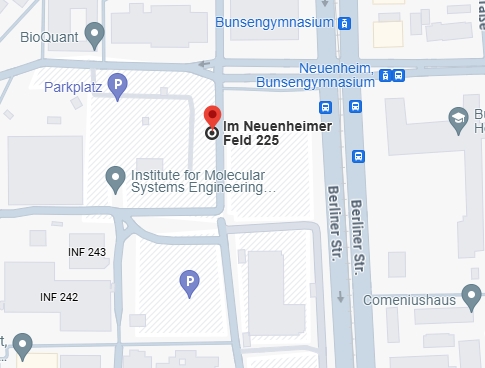
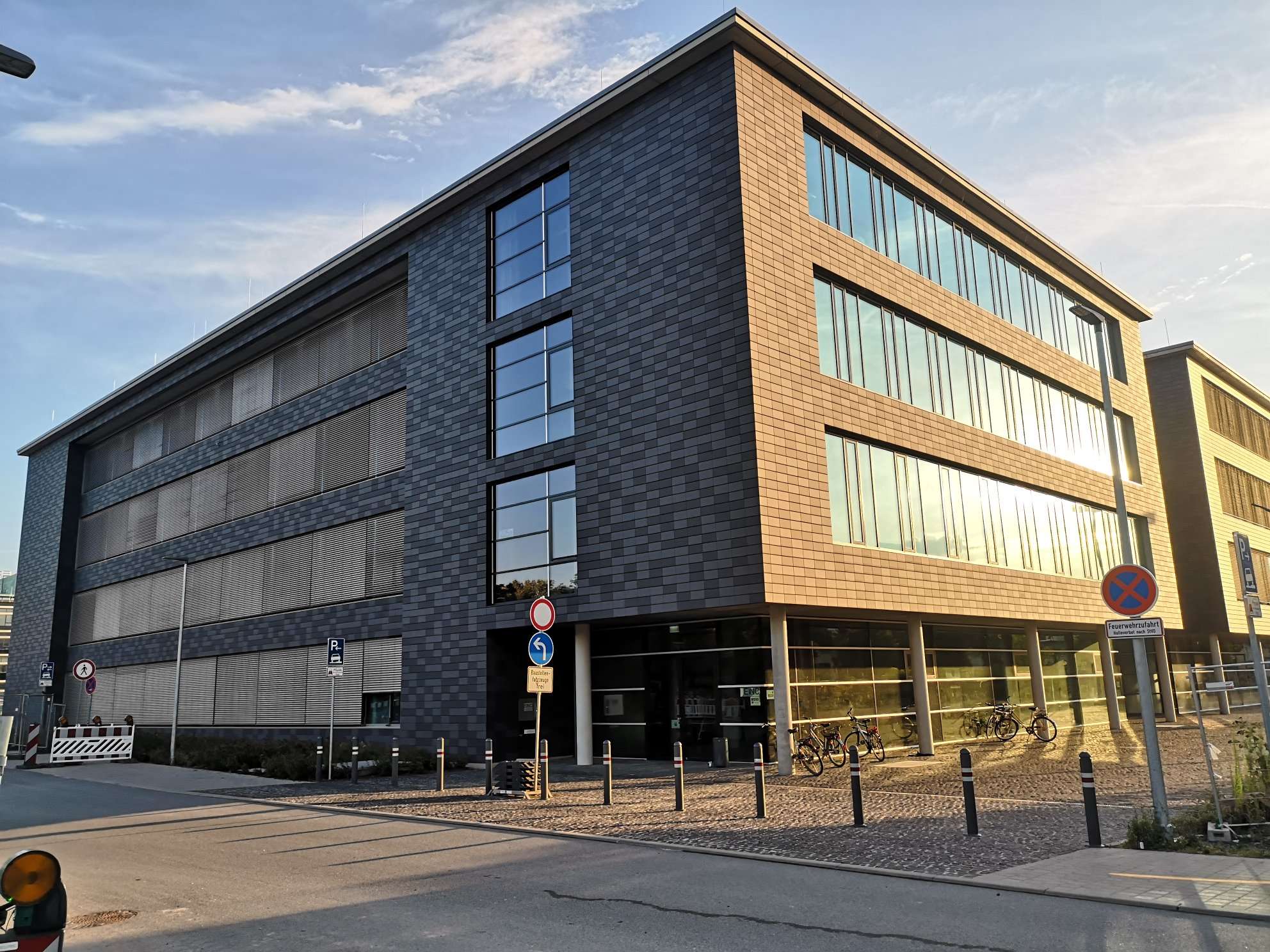
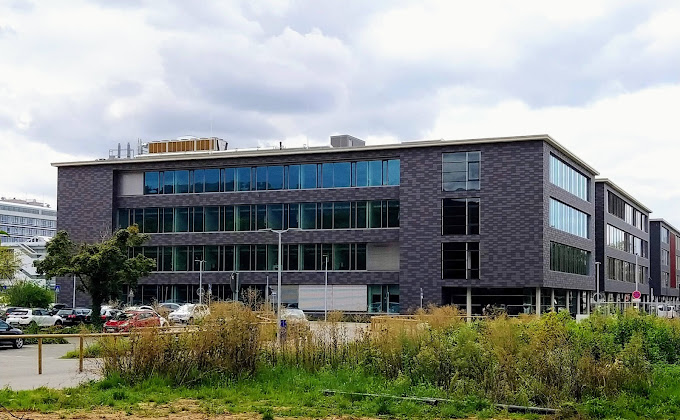
Note that we review applications as they come in and we aim at a one-week turn-around time. Weaker applications will be pushed back and eventually admitted at a later date. The application process closes July 25th or if all seats are allocated. Therefore, early applications are suggested (in particular if you have to plan your travel in advance).HeiChips 2026 will take place in the European Institute for Neuromorphic Computing (EINC). Street address: Im Neuenheimer Feld 225a, 69120 Heidelberg
For public transport: leave at bus/tram stop Bunsengymnasium (Bus 31, 37; Tram 21, 24, 25). Google maps works reasonably well or install the VGN app on your phone.
It is usually best to directly book a hotel through a major portal. Hotel Central and the IBIS are close to the main train station and in walking distance to the campus.
Dirk Koch, Riadh Ben Abdelhamid Novel Computing Technologies, ZITI, Heidelberg University
Prof. Dirk Koch
Novel Computing Technologies
Universität Heidelberg
Institut für Technische Informatik (ZITI)
Im Neuenheimer Feld 368, 69120 Heidelberg
dirk.koch@ziti.uni-heidelberg.de
Dr. Riadh Ben Abdelhamid
Novel Computing Technologies
Universität Heidelberg
Institut für Technische Informatik (ZITI)
Im Neuenheimer Feld 368, 69120 Heidelberg
riadh.benabdelhamid@ziti.uni-heidelberg.de
The week kicks off with a reception, opening remarks, and poster pitches for networking. The afternoon features a hackathon introduction, a talk on legal aspects of open-source hardware (Caren Kresse), and an introduction to Agentic AI for Hardware Design and Verification (Riadh Ben Abdelhamid). The day closes with a hike over the Philosophers' Walk followed by dinner.
Leo introduces the LibreLane flow with a hands-on workshop. Matthias then covers KLayout internals (the engine driving DRC and LVS), followed by an introduction to the KLayout Python API and a practical lab session designing your own PCell. The evening includes dinner at Marstall-Mensa and a city tour.
Simon leads a full day on open-source analog mixed-signal design: starting with an overview, then schematic entry (Xschem/Ngspice), physical layout in KLayout (LVS, DRC, PEX), and practical exercises building amplifiers or ring oscillators. In the afternoon, Georg introduces noRTL — creating complex digital circuits from Python code using Jupyter notebooks. The day ends with a BBQ and hackathon team forming.
Leo and Simon give a keynote talk followed by the hackathon kickoff. Teams work on taking their designs from RTL to silicon throughout the day, with curry provided for those pulling a late shift.
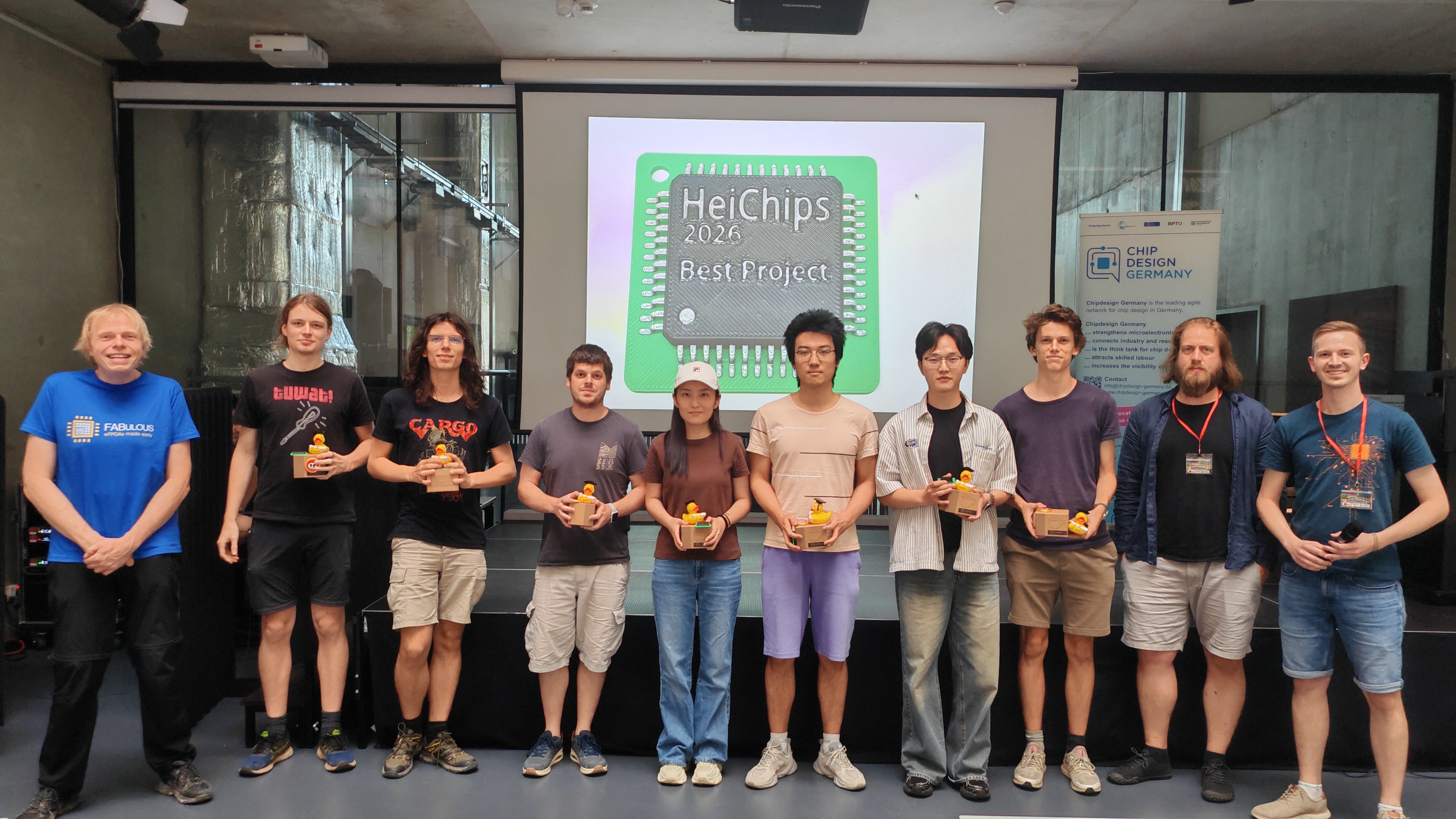
Full-day hackathon continues. The week concludes with a best project award and wrap-up at 16:30.
Heichips Summer School 2025, ZITI, Heidelberg University
FPGA Ignite Summer School 2024, ZITI, Heidelberg University
FPGA Ignite Summer School 2023, ZITI, Heidelberg University
FPGA Ignite Summer School 2022, ZITI, Heidelberg University